
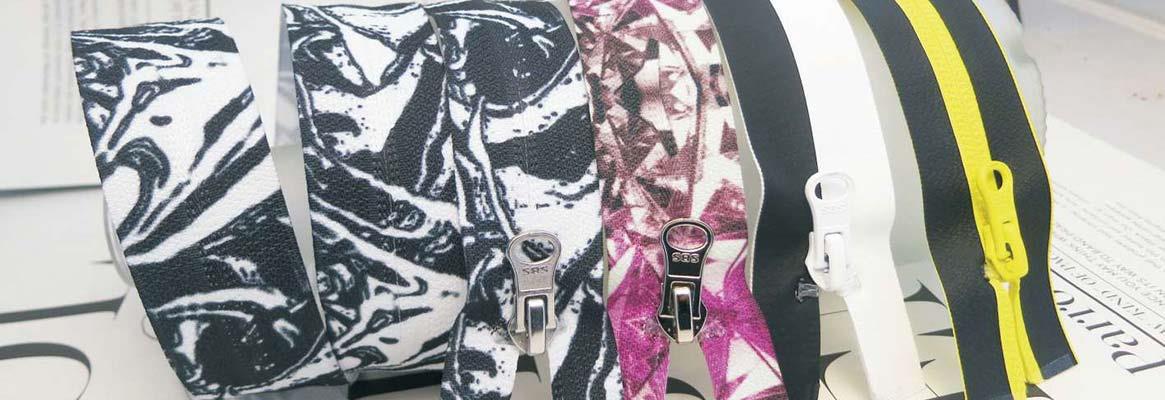
A waterproof zipper, as the name suggests, is specially made to avoid any liquid penetration. The most common application of waterproof zippers is on outdoor equipment to provide protection against the rain. However, the application is not solely limited to that, as we can find them on many products such as ski suits, cotton-waded jackets, diving suits, raincoats, tents, waterproof shoes, fishing wears, and waterproof bags.
There are a lot of factors you should consider when purchasing and using waterproof zippers. We will first discuss several key factors that can help you get the right fit for your needs.
1. Application
For patterned or printed fabrics (i.e. logo), you should pick waterproof zippers dedicated for printed fabrics (printing series waterproof zippers).
If you need temperature resistance (both high and low), you should choose TPU waterproof zippers or imported PU waterproof zippers.
For uniforms with special signs (i.e, police or army uniform), you should choose reflective waterproof zippers to maintain visibility.
For heavy-duty tests and industrial applications, numerous pulling back and forth of the zipper is often involved, imported PU waterproof zippers are the best choice.
2. Budget
Imported PU waterproof zippers are generally the most expensive choice, followed by TPU waterproof zippers. For a tight budget, PVC waterproof zippers are generally the most affordable choice.
3. Waterproof Quality
The width of the center seam greatly determines the waterproof performance. The wider the central seam, the worse generally the waterproofing quality.
4. Waterproofing Film
You should choose a film that won't come off easily after repeated washing or exposure to low and high temperature. A high-quality film will guarantee the durability of the waterproof zipper.
5. Color Differences/Color Fastness
When choosing colored waterproof zippers, you should consider the color difference between the zipper tape and the film. Ideally, the color difference should be controlled below 5% to maintain aesthetic balance.
For maximum color uniformity on the surface without little to no turbidity point, colored film waterproof zippers are recommended.
You should also consider the color fastness (resistance to running or fading) when purchasing waterproof zippers.
6. Surface Smoothness
The film surface should feel flat and smooth. Generally, the smoother the film, the better.
7. Eco-Friendliness
Waterproof zippers should be environmentally friendly, passing the OEKO-TEX100 standard certification or other similar eco-friendly certifications.
In short, always opt for reliable waterproof zipper suppliers and try to maintain a balance between the application, waterproof quality, budget, waterproofing film, color differences/color fastness, eco-friendliness and surface smoothness.
Tips for Proper Use and Maintenance
In the previous part, we have discussed the basic tips you could follow while purchasing waterproof zippers. Now, we will continue by discussing several tips for using waterproof zippers.
1.Washing
Close the zipper prior to washingto protect the waterproof film. Avoid washing in the hot water, and let thefabric air-dry naturally.
2. DryCleaning
While dry cleaning is generallyallowed, it may differ depending on the fabric and zipper material. Please readthe washing instruction and contact us if there's any difficulty.
3.Ironing
Avoid directly ironing thewaterproof zipper, as it may cause the waterproof film to peel off. Place apiece of cloth on the surface prior to ironing, and use low temperature below100?.
4.Installation
Chemical reactions can usuallytake place between the waterproof zipper and the PVC/PU film surfaces. As aresult, this can stain the fabric, especially bright white fabrics. Place apiece of cloth between the fabric and waterproof zipper when installing.
5.Packing
Use a piece of paper between theitems to prevent color transference between the zipper and the fabrics.
Reference
SBS Zipper
Copyright © 2024 SBS Corporation All Rights Reserved.